
Faith-Based Recovery — Clinical Care
Hope Counseling Southwest
Faith-Based and Clinical Care
One of the Only Clinics in America with Both Types of Care

You or your loved one may need to consider the additional therapeutic services of Hope Counseling Southwest, one of the few Adult & Teen Challenge clinics that provide affordable, faith-based counseling with licensed clinical care to help adults recover from mental health or a life-controlling conditions.
For over a half century, Adult & Teen Challenge faith-based programming and counseling have addressed the spiritual dimension of mental health and substance abuse recovery, including identity, purpose, community, and accountability. Thousands of people around America and the world have been blessed by recovery from Adult & Teen Challenge care services.
Now, Hope Counseling Southwest, based in New Mexico, offers the next level of Adult & Teen Challenge clinical care addressing psychological and neurological dimensions.
Many people in recovery need to take advantage of the additional benefit of clinical support, it is especially important for people managing:
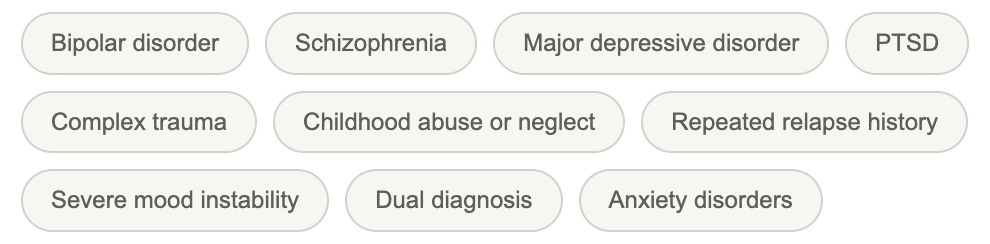
For individuals in any of these categories, licensed care is not optional. It is a foundational component of any realistic recovery plan.
Hope Counseling Southwest provides licensed outpatient counseling services. Adult & Teen Challenge New Mexico offers long-term, faith-based residential recovery. Their partnership allows individuals to receive both without compromise:
-
» Residential structure, community, and discipleship through Teen Challenge
-
» Licensed therapy, mental health assessment, and dual diagnosis care through Hope Counseling Southwest
-
» Continued outpatient counseling to support the transition out of residential care
The result is a continuum of care that addresses the spiritual, emotional, and psychological dimensions of recovery together.
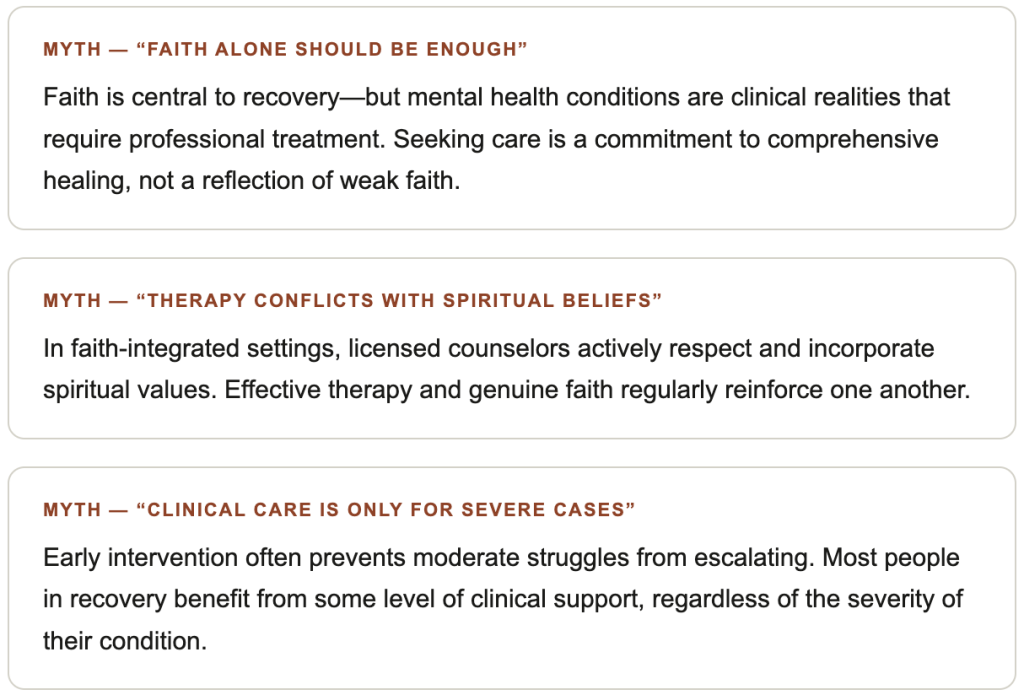
Clearing Up Common Misconceptions
What Families Should Look For
When evaluating a recovery program for a loved one, these questions are worth asking:
-
» Does the program offer access to licensed counselors or therapists, or a formal partnership with a clinical provider?
-
» Can the program address both addiction and co-occurring mental health conditions?
-
» Are staff trained in trauma-informed approaches?
-
» Is there a clear plan for continued care after the residential program ends?
-
» Does the program treat spiritual growth and clinical care as complementary rather than competing?
The answers to these questions often predict long-term outcomes more accurately than program length or curriculum alone.
Frequently Asked Questions
Why does licensed care reduce relapse risk?
Licensed clinicians identify and treat the underlying psychological conditions that drive substance use. When those root causes are addressed—not just managed through routine and behavior—the risk of relapse decreases significantly.
What is a dual diagnosis?
A dual diagnosis means a person is experiencing both a substance use disorder and a mental health condition at the same time. Both require treatment; addressing only one rarely produces a stable, lasting recovery.
Can faith-based programs include licensed therapy?
Yes. Some programs employ licensed clinicians directly; others, like the Hope Counseling Southwest and Adult & Teen Challenge New Mexico partnership, establish formal relationships with licensed providers to offer both spiritual and clinical care.
Is therapy necessary if someone has strong faith?
Faith addresses the spiritual life. Therapy addresses the psychological and neurological dimensions of addiction and mental illness. They serve different functions, and for many people, both are essential.
How does the Hope Counseling Southwest and Adult & Teen Challenge New Mexico partnership work?
Teen Challenge provides long-term residential recovery grounded in faith-based programming. Hope Counseling Southwest provides licensed outpatient counseling. Together, they offer a continuum of care that addresses both the spiritual and clinical dimensions of recovery.
Why Choose Faith-Based Licensed Clinical Care?
What Licensed Clinical Care Provides
Licensed care means treatment delivered by credentialed professionals such as licensed professional counselors (LPCs), psychologists, clinical social workers, or psychiatrists. These clinicians can do things that pastoral support cannot:
-
» Formally diagnose mental health conditions
-
» Deliver evidence-based therapies (CBT, DBT, EMDR, and others)
-
» Develop individualized treatment plans that adapt over time
-
» Treat co-occurring disorders—addiction alongside mental illness
-
» Provide trauma-informed care that does not re-traumatize
-
» Coordinate medication when it is clinically appropriate
Why Co-occurring Disorders Change Everything
A central insight: When addiction and a mental health condition exist together, what clinicians call a “dual diagnosis,” treating only the addiction is rarely enough. Both conditions must be addressed simultaneously, or either could worsen the other.
The relationship between mental illness and substance use is often cyclical. Someone with untreated depression may use alcohol to dull the pain. Someone with undiagnosed bipolar disorder may use stimulants during depressive episodes to feel functional. When only the addiction is treated, the underlying condition remains, and the pull toward substances returns.
Licensed clinicians are trained specifically to:
-
» Identify which condition appeared first and how each is affecting the other
-
» Treat both conditions with integrated, coordinated care
-
» Recognize when symptoms attributed to “spiritual resistance” may be psychiatric in nature
-
» Adjust treatment as conditions stabilize or shift

How Trauma Complicates Recovery
Trauma is one of the most under-appreciated drivers of addiction. Childhood abuse, domestic violence, loss, and other traumatic experiences alter how the brain processes stress and safety, often in ways that persist for decades. Substance use frequently begins as a coping mechanism for trauma symptoms that were never properly addressed.
Trauma-informed clinical care goes beyond recognizing this pattern. It actively works to:
-
» Create a therapeutic environment where disclosure feels safe
-
» Process traumatic memories without re-traumatization
-
» Help individuals understand the neurological and emotional impact of what they experienced
-
» Build new, healthier patterns of stress response
How Clinical Care Builds Long-Term Recovery
Recovery is not simply the cessation of substance use. It is the construction of a stable, sustainable life. Licensed care contributes to that process in concrete ways:
-
Identifying root causes: Therapists help individuals understand the emotional, psychological, and relational factors that drove their substance use—knowledge that is essential for preventing relapse.
-
Building practical coping skills: Clients learn evidence-based tools for managing stress, navigating triggers, and regulating difficult emotions without substances.
-
Improving emotional regulation: Techniques drawn from therapies like DBT help people manage mood instability, anxiety, and impulsivity in sustainable ways.
-
Addressing relationship dynamics: Therapy surfaces patterns around communication, boundaries, and codependency that, left unexamined, frequently undermine recovery.
-
Planning for what comes after: Licensed counselors help design aftercare plans that maintain momentum when the structured support of a residential program ends.
"NO WARRANTY" LEGAL NOTICE: While independent outcomes studies have shown very high recovery rates for indiviuals in our programs, we cannot guarantee recovery for any particular individual. Recovery and future abstinence from addicting substances and the effects that such substances may have on the individual or their life, actions, or their future are entirely dependent on the individual and how well they apply the principles we have taught them. We are an educational institution, and how the individual in our program learns from what they are taught and modeled here, is totally up to them. Individuals who stay the full term (until graduation) have much better long-term recovery from addicitons than those who do not.
